
A clearer plan before you add another layer.
If you are comparing attic insulation quotes in Toronto or the GTA, R-60 is a number you are likely to hear. It is useful, but it is only one part of the decision. The condition of the attic, the preparation, the installation specification and any rebate rules all deserve their own questions.
This guide explains what to ask before booking an upgrade. Start with your home, then check the current programme requirements before counting on financial assistance.
The short answer
R-60 describes a thermal-resistance target. It does not tell you whether ceiling leaks are sealed, bathroom exhaust is connected outdoors or your project qualifies for a rebate. A clear quote explains those details separately.
Programme information checked: November 24, 2026. The published attic-stream terms currently refer to installation by November 30, 2026 and entry into the programme tracking system by December 31, 2026. Confirm the current position with the administrator before proceeding; a live webpage is not confirmation that a particular project can still qualify.
What does R-60 mean for your attic?
R-value measures resistance to heat flow. A higher number means greater thermal resistance under the stated conditions. Natural Resources Canada explains the relationship between R-value and its metric equivalent, RSI, in Keeping the Heat In.
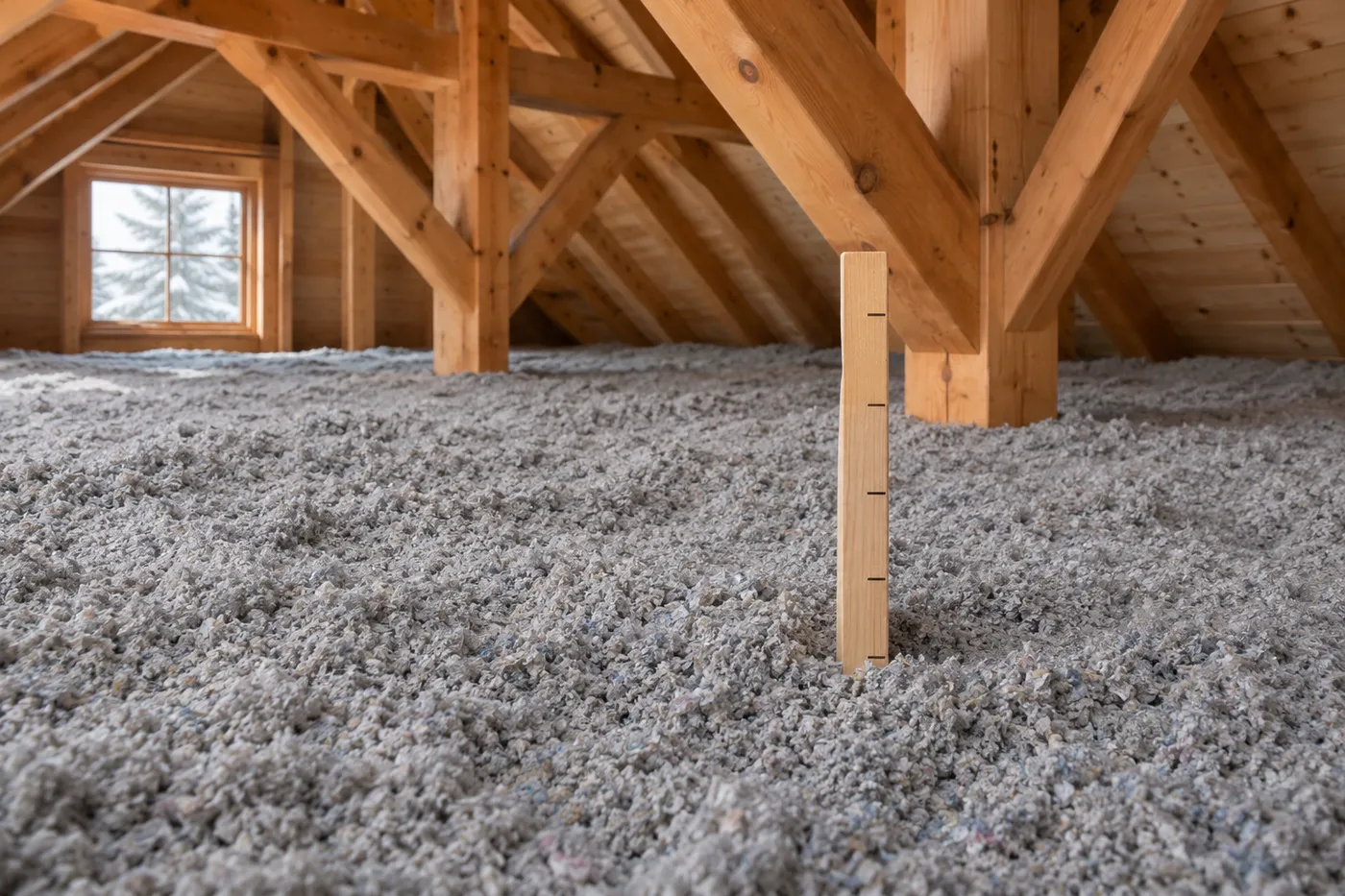
For a loose-fill upgrade, the specification should identify the product, the target and the quantity and depth required by its coverage chart. Existing insulation also needs to be assessed. One depth measurement cannot tell the whole story about a mixed or uneven layer.
There is no universal number of inches that represents R-60 for every insulation product. Initial depth and settled depth can differ. Ask which manufacturer’s chart is being used and how the finished coverage will be checked.
An upgrade target is different from a rebate threshold
The target appropriate for your attic depends on the roof assembly, existing condition and project requirements. A rebate programme can set its own minimum. Meeting that minimum does not, by itself, define the best scope for the home or establish compliance for every type of construction work.
Compare the scope, not just the R-value.
What happens before insulation?
Ask how air leaks, dampness, existing material and blocked ventilation will be assessed. If removal or remediation is needed, it should be identified before the new layer is installed.
What will be installed?
Ask for the material and agreed thermal target, together with the product-specific installation guidance. Discuss low areas, obstructions, perimeter coverage and how intended airflow at the eaves will be preserved.
How will the result be reviewed?
Discuss the final coverage check, depth references and the agreed scope. Ask what will remain outside the job, such as a roof repair, a cooling-system issue or a separate inaccessible assembly.
Two Home Renovation Savings routes to check.
The programme offers different routes. Use the official eligibility tools to establish which one applies before starting work or assuming that a contractor can deliver an incentive.
Attic stream without an energy assessment
The dedicated attic stream currently lists a participating-contractor requirement and a minimum attic upgrade level of R-50. Its listed maximum depends on the starting insulation: up to $1,250 at R-12 or below, $1,000 above R-12 through R-25, or $800 above R-25 through R-35.
Ownership, eligible housing and heating arrangements, roof-area coverage and prior participation also affect eligibility. These are programme limits, not a quote or guaranteed payment. Confirm the current terms and deadlines directly.
Bundled upgrades with an energy assessment
The assessment-based route requires an initial home energy assessment before work, at least two qualifying upgrades and a follow-up assessment. Its current overview lists attic insulation rebates up to $1,500, subject to the applicable rules.
Do not assume the two streams can be combined or that a completed upgrade can be enrolled afterward. The administrator and registered energy advisor can confirm the correct sequence and requirements for your home.
Before you choose a contractor: check participation requirements in the official programme. This guide does not establish Eco Logic’s registration in a rebate stream. If your budget depends on a rebate, confirm the contractor’s eligibility and your application route before authorizing installation.

Bedroom comfort is part of the reason to plan the attic properly. Photo: Anton Sobotyak / Unsplash.
Bring these questions to the conversation.
- What is the condition of the existing insulation?
- Which air-sealing and ventilation details need attention?
- What product and target are included in the quote?
- How are access, protection and cleanup handled?
- Which rebate route, if any, is confirmed before work?
If you notice frost, staining, a bathroom-fan drip or an uneven room temperature, mention it before the scope is finalized. A useful improvement starts with understanding the cause.
Eco Logic is a family-owned attic insulation specialist with more than 13 years of experience. You deal directly with an installer who explains the proposed work. Learn more about our approach to attic performance or our insulation removal service.
R-value and rebate questions
What does R-60 attic insulation mean?
R-60 describes thermal resistance. The depth and amount of insulation needed depend on the selected product and any suitable existing material. The attic condition and intended assembly must be assessed before an installation specification is agreed.
Is R-60 a universal Ontario retrofit requirement?
An upgrade target, a programme threshold and the requirements for a particular building project are different things. Confirm the applicable requirements for your roof assembly and scope rather than treating R-60 as a universal rule for every existing home.
Do I need an energy assessment to receive a rebate?
It depends on the programme stream. The dedicated Home Renovation Savings attic stream uses participating insulation contractors without a home energy assessment. The bundled stream requires an initial assessment before work, qualifying upgrades and a follow-up assessment. Confirm your route with the programme administrator.
Does choosing R-60 guarantee a rebate?
No. Eligibility also depends on the programme, the home, existing insulation, application timing, contractor requirements and documentation. Check the official rules before you book work that depends on financial assistance.
Can I add cellulose on top of old insulation?
Sometimes suitable dry material can stay. Moisture, contamination, air leakage and blocked ventilation need attention before a top-up. An attic assessment helps determine whether retention, selective removal or extraction is appropriate.
Start with the attic you have.
Tell us about your home, its location and what you would like to improve. We will explain the next step in assessing the attic and planning the appropriate work.
Call (416) 990-7655. Serving Toronto, Mississauga, Oakville, Etobicoke and the GTA.
Your attic.
Your next step.
Not sure how the information applies to your home? Talk directly with a qualified installer.