
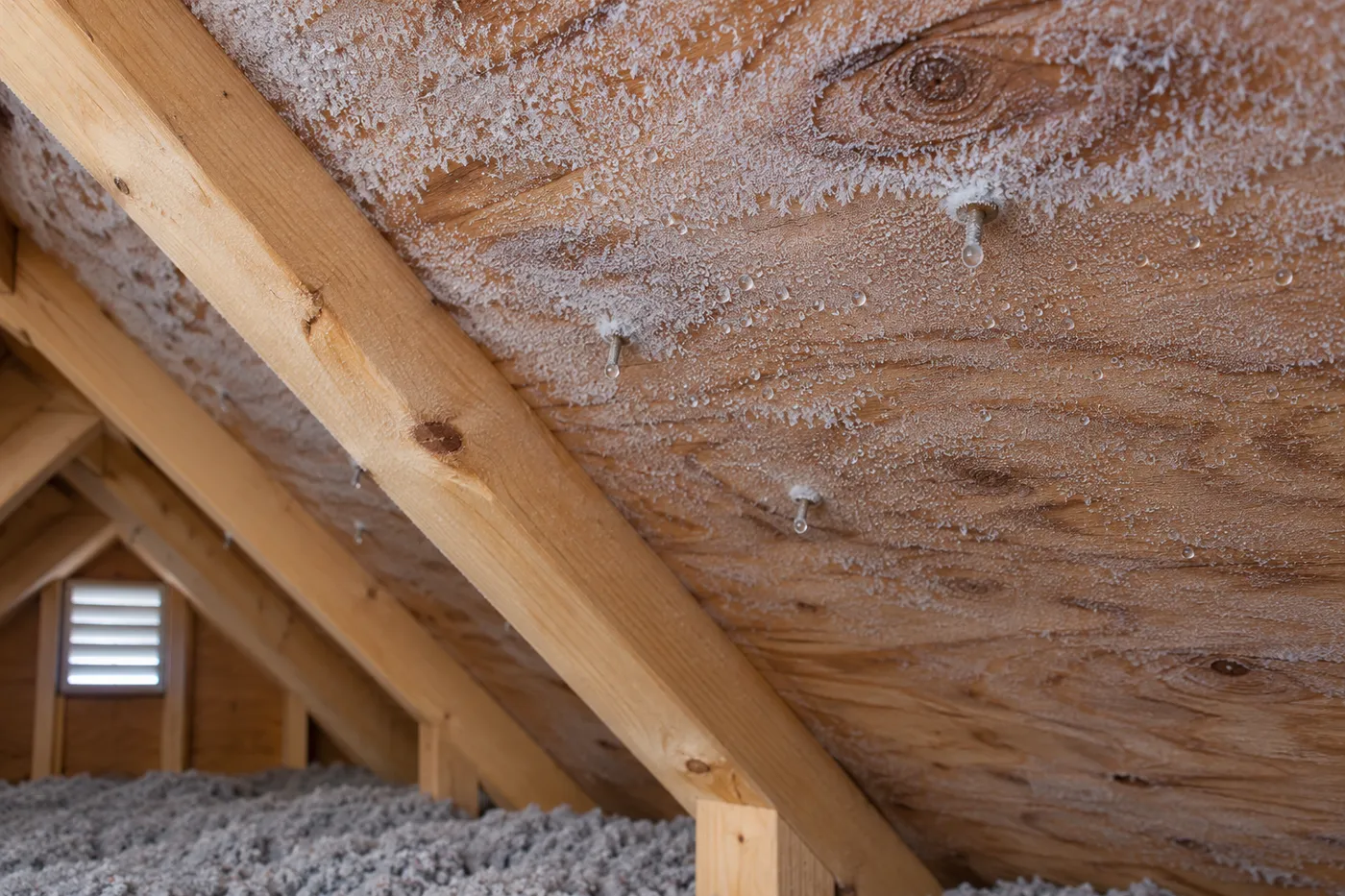
Featured image: an AI-generated illustration of attic frost, not an inspection or project photograph.
A new ceiling stain is easy to blame on the roof. But if it appears after a cold spell gives way to milder weather, water may have started inside the attic rather than coming through the shingles.
Homeowners often call this attic rain: moisture collects as condensation or frost, then drips when conditions warm up. Roof leaks and ice-dam leakage can leave similar marks. The useful question is not just “Where is it wet?” but “When does it get wet, and where did that moisture begin?”
Attic rain comes from moisture condensing inside the roof space. A roof leak brings water in from outside. Timing and staining patterns can help an inspector investigate, but neither proves the cause. A winter ceiling stain deserves a moisture-source assessment before you buy an insulation top-up.
Find the answer you need
What is attic rain?
Warm air from the home can carry moisture into a cold attic through gaps in the ceiling. When that air reaches cold roof sheathing or framing, water can condense on the surface. In freezing conditions, it may collect as frost. A thaw can turn that stored frost into droplets.
This is a moisture process, not a diagnosis you can make from one brown patch. A little frost and repeated wetting are different situations. The amount, location and drying conditions matter, and other water sources still need to be considered.
The Pacific Northwest National Laboratory’s cold-weather condensation guide explains how indoor moisture, air leakage and cold roof surfaces interact. That building-science relationship is the starting point for this article.
Attic rain, a roof leak or an ice dam: clues worth noting
Use these patterns to describe the problem when you arrange an inspection. They are clues, not a way to rule a cause in or out yourself.
Attic condensation or frost melt
You notice dripping after a cold spell followed by a thaw, sometimes without rain. An inspection may find moisture across cold sheathing or around air-leakage paths.
Roof or flashing leakage
Wetting follows rain, wind-driven rain or snowmelt. The inspector checks roofing, flashings and penetrations, including areas upslope of the visible stain. Water can travel before it reaches a ceiling.
Ice-dam leakage
Snowmelt backs up behind ice near the roof edge and finds a route indoors. This is outside water entry, even when heat escaping from the house contributes to the conditions that form the ice.
For the distinction between snowmelt, roof-edge ice and water backing up, see University of Minnesota Extension’s explanation of ice dams.
More than one problem can exist. A roof defect, damp indoor air and an exhaust-duct problem do not have to take turns. The shape of a stain alone is not enough to separate them.

What can you do safely before the inspection?
You do not need to climb onto the roof or move attic insulation to collect useful information. Start in the rooms you can reach normally.
- Record the timing. Note the date, rain or snow, recent cold weather and any thaw. Add whether the mark appeared during or after a shower.
- Photograph visible changes. Take dated pictures from a safe position in the room. Note whether the same patch becomes wet again.
- Watch ordinary moisture clues. Mention persistent window condensation, musty smells and bathroom-fan drips. These observations give the inspector context.
- Describe the history. Share recent roofing, bathroom, insulation or ventilation work, even if it seems unrelated.
Active dripping, a sagging ceiling or water near electrical fittings needs prompt attention. Keep clear of the affected area and arrange appropriate professional help. Do not stand beneath a sagging ceiling, touch wet electrical equipment or climb an icy roof.
If getting into the attic is unsafe or access is restricted, leave that part to the inspector. Do not disturb unfamiliar loose-fill insulation or suspected vermiculite just to look for a leak.
Will adding insulation stop attic rain?
Not necessarily. More material does not repair a roof defect, reconnect a bathroom exhaust duct or seal a ceiling penetration. It can also cover details that still need attention. Natural Resources Canada’s attic guidance advises identifying and correcting moisture problems before adding insulation.
For a vented attic, the review usually connects three jobs: air sealing and ventilation to manage leakage and intended airflow, and suitable attic insulation to limit heat transfer. Ventilation openings need to remain clear; increasing the number of vents is not a substitute for understanding the existing arrangement.
ENERGY STAR’s attic ventilation guidance describes why air sealing, insulation and clear soffit airflow work together.
A bathroom-fan drip is worth mentioning
A drip at a fan does not automatically mean the roof cap is leaking. The housing, duct connection, insulation around the duct and its outdoor termination can all deserve a closer look. Tell the inspector whether the drip follows showers, weather changes or both. Do not assume a new fan alone will resolve it.
What if you notice staining or a musty smell?
Ask for the moisture source to be investigated rather than painting over the mark. Where mould is present, cleanup and moisture control need to be considered together. Health Canada’s moisture and mould guide covers indoor moisture sources and when professional assistance is appropriate. This article does not identify mould from a photograph or prescribe a cleanup method.
Should you call a roofer or an attic specialist?
If wetting follows rain or there is visible roof damage, discuss a roofing inspection. If the pattern follows cold spells and thaws, or includes comfort and ventilation concerns, an attic assessment can help connect the observations. Sometimes the sensible next step involves both trades.
Eco Logic provides attic troubleshooting in the GTA. We consider the roof structure, visible attic conditions, air pathways and insulation before discussing work. Thermal camera inspection may help focus a closer look when conditions suit it, but a thermal image alone does not prove a leak or see through a ceiling.
You deal directly with a qualified installer, not a salesperson. As a family-owned business with more than 13 years of experience, we keep the conversation centred on what your home needs and what the inspection can actually establish.
Questions homeowners ask about attic rain
Why does my ceiling leak in winter when it is not raining?
A thaw can melt frost that collected inside an attic, while snowmelt can also enter through roof defects or back up behind an ice dam. Weather timing is useful information, but a roof-and-attic inspection is needed to identify the actual route.
Is a small amount of attic frost normal?
Some frost can occur during cold conditions. Repeated dripping, heavy accumulation, wet insulation or material damage calls for investigation. Do not judge the whole attic from one nail tip or assume that all frost means a major failure.
Will extra roof vents fix attic condensation?
Not automatically. The assessment should consider indoor moisture, ceiling air leakage, intake paths, exhaust ventilation and the roof assembly. Simply adding an exhaust vent does not address every cause of condensation.
Should wet attic insulation be topped up or removed?
Do not cover wet material before the moisture source is resolved. The next step depends on the material’s condition, drying, contamination and the planned work. Eco Logic explains whether existing insulation can stay or extraction should be considered.
What should I send when asking Eco Logic for an assessment?
Share your GTA location, when the staining or dripping happens, dated photographs taken safely from the room, and details of earlier roof or attic work. You do not need to enter the attic or diagnose the problem before contacting us.
Start with the cause.
Then decide on the work.
Tell Eco Logic when the stain appeared and where you are in Mississauga, Oakville, Etobicoke or the GTA. We will discuss an attic assessment and explain the next step.
Further reading: Eco Logic’s attic insulation FAQs.
Your attic.
Your next step.
Not sure how the information applies to your home? Talk directly with a qualified installer.